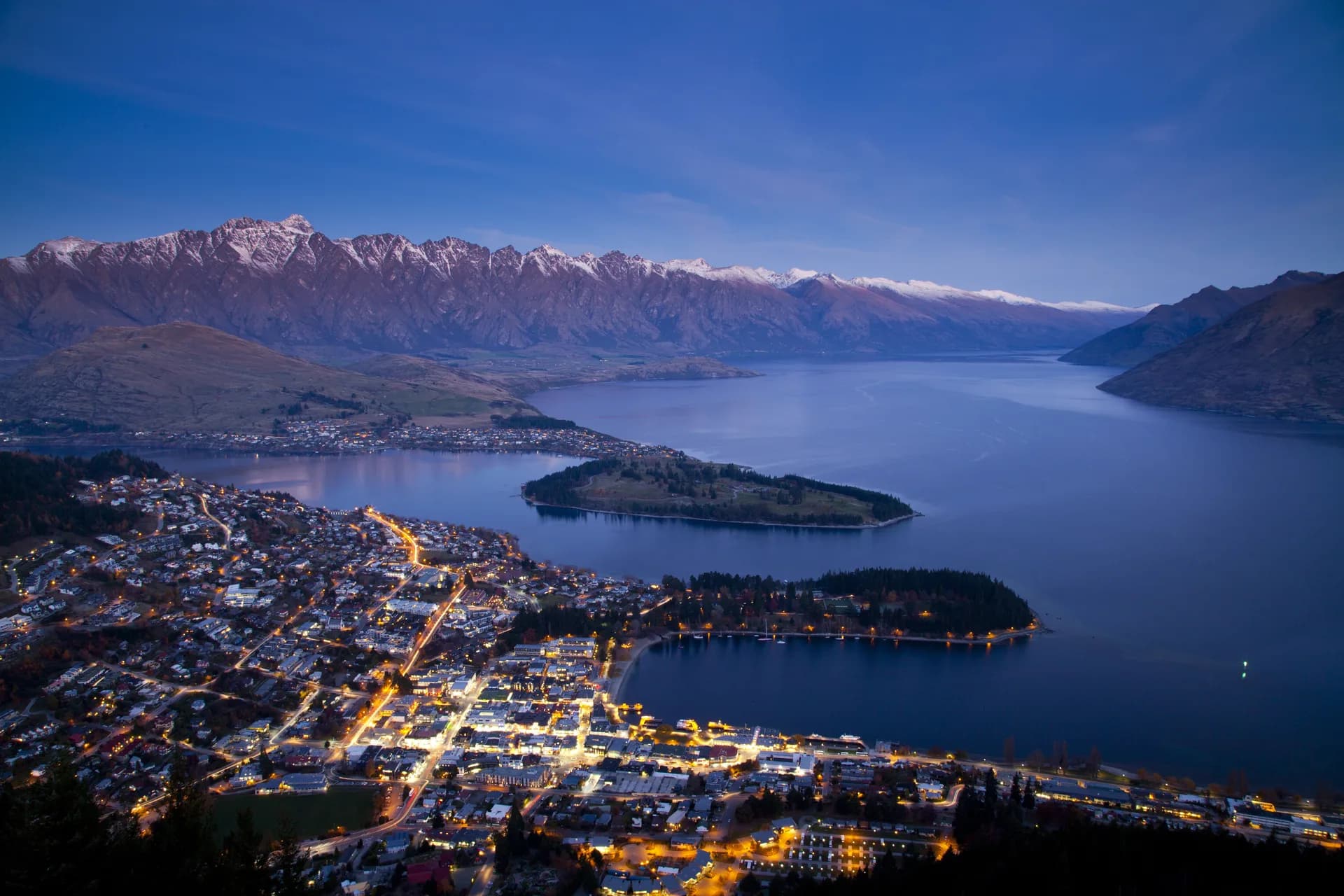
Queenstown looks like a town that was always going to be famous. It is not. For most of its recorded history it was somewhere people passed through on the way to something else: pounamu on the West Coast, gold in the Shotover, sheep on the flats. It became the Adventure Capital of the World in living memory, and the decision that did it was made in 1988.
Here is the whole arc, in order.
Before there was a town
Long before Europeans reached the basin, the lake had a name: Whakatipu Waimāori. The flat, shallow beach where the town centre now sits had one too, Tāhuna, which describes exactly that: a shoal, a shallow bay.
The Whakatipu was not empty and it was not a settlement in the way Europeans understood the word. It was a route and a larder. Kāi Tahu travelled through it seasonally on trails that ran from the east coast towards the pounamu sources of Te Tai Poutini, the West Coast, taking eels, weka, fernroot and tī kōuka along the way. Semi-permanent camps rather than permanent villages, because the basin in winter is a hard place to stay, and there was better country to winter in.
Two things follow from that, and both matter for reading everything below. First, the "discovery" dates that appear in histories of Queenstown are dates of European arrival, not of human arrival. Second, the trails the gold miners used were mostly not new, they were already there.
There is far more to this than one section can hold, and it is not ours to summarise casually. A dedicated guide to the Māori heritage of the Whakatipu is in preparation with mana whenua review.
1853: the first European sees the lake
Nathanael Chalmers, a young runholder, was the first European to see Lake Whakatipu, in 1853. He did not find it. He was taken there by Reko, a Kāi Tahu chief from Tuturau, and travelled home down the Clutha on a mōkihi, a raft of bundled raupō, because by then he was too ill to walk.It is worth holding onto that detail. The first European account of this landscape exists because Māori guides took him in and got him out again.
1860: sheep
William Gilbert Rees and Nicholas von Tunzelmann arrived in 1860 looking for grazing country. Rees took up a pastoral run at the head of the bay, where the town centre is now, and built a homestead and a woolshed. Von Tunzelmann settled across the water. For two years, Queenstown was a sheep station.1862: gold, and everything changes at once
Gold was found in the Arrow River in 1862. The find is usually credited to Jack Tewa, a Māori shearer working for Rees, with William Fox and others working the river shortly after and trying hard to keep the location quiet. They failed. The same year, prospectors found gold in the Shotover, which became known as one of the richest rivers in the world by the yard, and Hartley and Reilly's deposit of Clutha gold in Dunedin sent the Otago rush inland.
The effect on Rees's sheep station was total. Within months there were thousands of men in the basin. Rees lost his run to the goldfields and, with an eye that has to be admired, turned his woolshed into a hotel: the Queen's Arms, which still trades on the same waterfront site as Eichardt's.
The name is less well documented than the town would like. The popular story is that a miner declared the place "fit for Queen Victoria". It is a good story. It is not a recorded fact, and you should treat it as folklore rather than history.
What the rush actually built
Gold rushes are usually remembered as chaos, but the infrastructure they leave is the real legacy:
- Arrowtown grew up around the Arrow diggings and survived, which is why it is now the best-preserved gold town in the district. Our Arrowtown day trip guide covers what is left.
- Skippers Road, cut by hand into the Shotover gorge through the 1880s, is still one of the most alarming drives in New Zealand and still only sensibly done with an operator.
- The Kawarau Bridge went up in 1880 to carry traffic to the diggings. Remember it: it comes back at the end of this story.
The Chinese miners, and the part that took 140 years to acknowledge
From the mid-1860s, as the easy gold ran out and European miners left for newer fields, the Otago provincial government invited Chinese miners to rework the tailings. They came, largely from Guangdong, and they made a living from ground others had abandoned.
They were also taxed for existing. A poll tax was imposed on Chinese immigrants in 1881 and not repealed for decades. The Crown formally apologised in 2002.
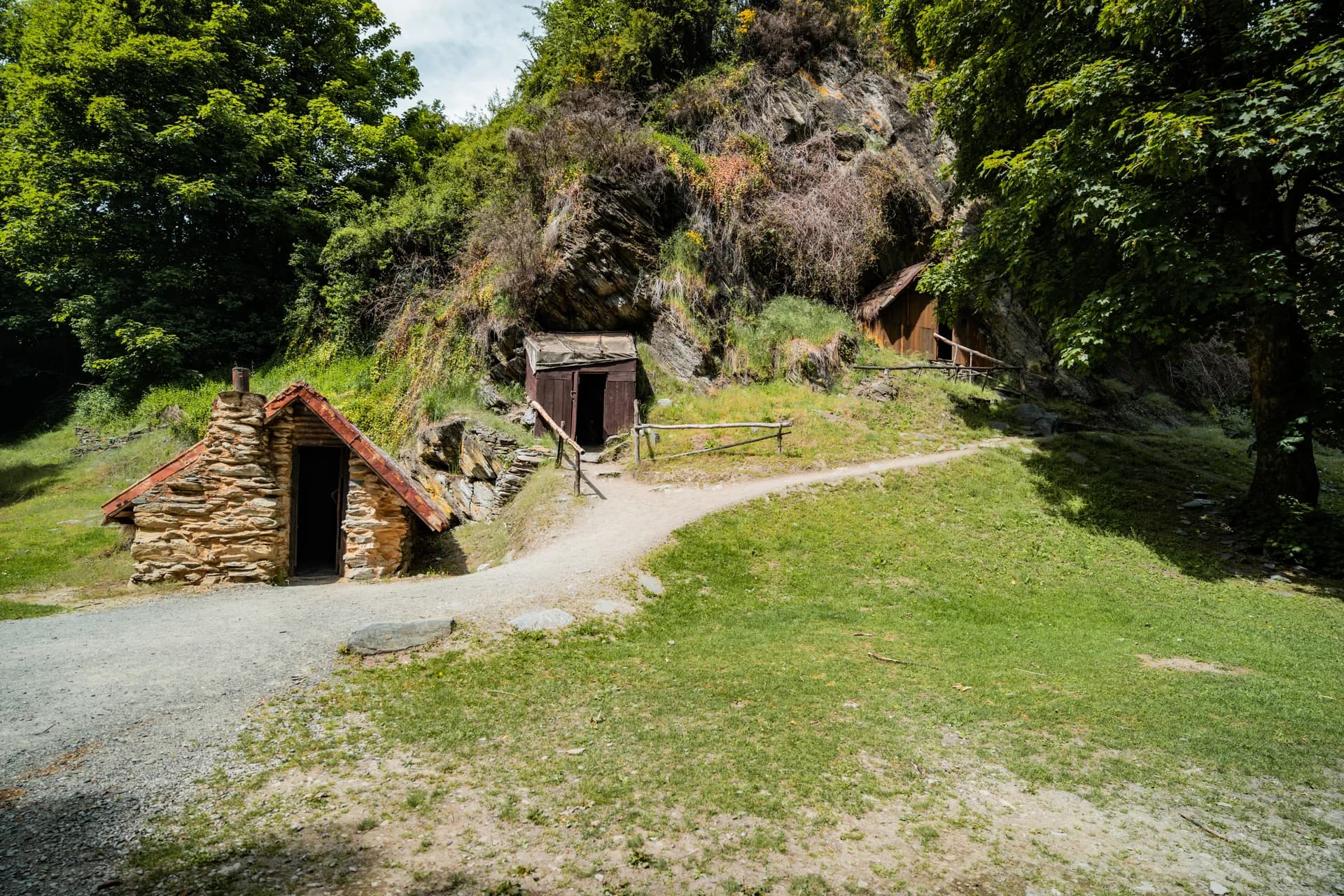
The restored Chinese settlement on Bush Creek at Arrowtown is the most important historic site in the district, and it is free. Small stone and sod huts, on the cold side of the creek, outside the town proper, the layout tells you the social history without a word of interpretation.
After the gold: seventy quiet years
By the early 1900s the gold was gone and the district went back to farming. Queenstown became a modest lake town with a steamer service, which is the era that produced the vessel most visitors now associate with the place.
The TSS Earnslaw was launched in 1912, built in Dunedin, railed to Kingston in sections and assembled on the lakeshore. She was a working ship: stock, mail and supplies to farms with no road access. She is still coal-fired, still running, and now the oldest thing in Queenstown that you can buy a ticket for.
Skis, jet boats and a gondola
Queenstown's second act was recreational, and it built slowly:
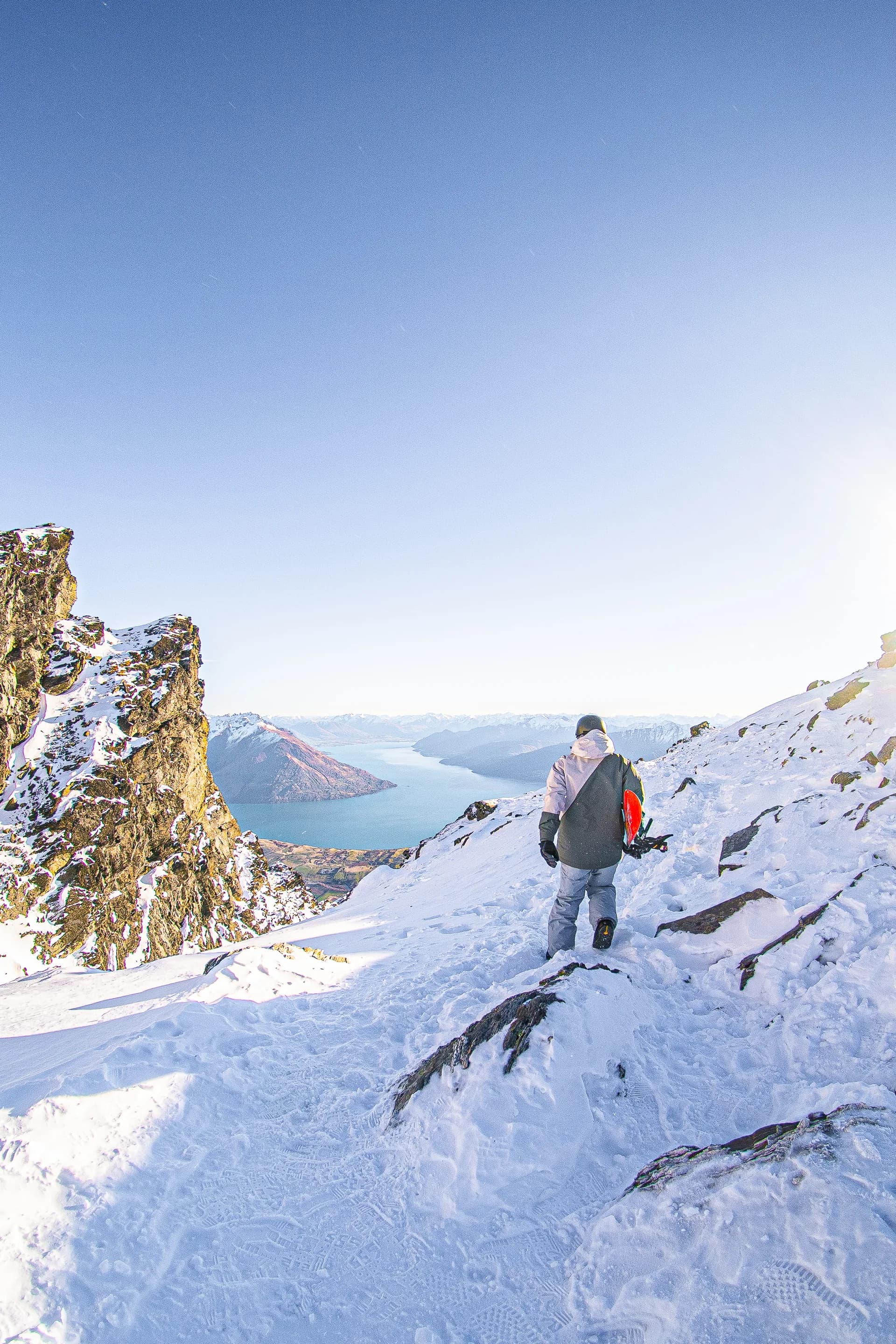
- 1947: Coronet Peak opened, generally credited as New Zealand's first commercial ski field. Winter stopped being the off-season.
- The 1950s: the Hamilton jet. Bill Hamilton, a Canterbury engineer, developed the modern waterjet to run boats up shallow braided rivers. It is difficult to overstate how much of Queenstown's tourism rests on that one invention; commercial jet boat trips began running the Shotover in the 1960s.
- 1967: the Skyline gondola put the view within reach of anyone.
- The mid-1980s: The Remarkables opened as a second ski field, and the town had a proper winter product. See our skiing guide for how the fields compare now.
By the 1980s Queenstown was a well-regarded scenic resort. Pretty, seasonal, and a long way from anywhere.
1988: the jump
In 1988, AJ Hackett and Henry van Asch opened a commercial bungy operation off the Kawarau Bridge, the same 1880 gold-rush bridge. It was the first in the world.
That is the hinge of the whole story. Not because bungy jumping is a large industry, but because it reframed what the place was for. Queenstown stopped being somewhere you looked at scenery and became somewhere you did something in it. Everything that followed (the canyon swings, the skydiving, the rafting, the mountain biking, the phrase "Adventure Capital of the World") sits downstream of a decision two New Zealanders made about a disused bridge.
You can still jump off it. Our bungy guide covers the three sites.
The 2000s added international recognition of a different kind, when the Lord of the Rings films put the Wakatipu and the country beyond Glenorchy in front of a very large audience. The Glenorchy and Paradise drive goes through most of it.
What the history left you
Queenstown's past is unusually legible. Most of it is still standing, and most of it is free to look at:
- The Lakes District Museum, Arrowtown: the proper starting point, and it sells gold panning kits.
- The Arrowtown Chinese settlement: Bush Creek, ten minutes' walk from the Arrowtown main street.
- Kawarau Bridge: the 1880 bridge and the first commercial bungy site, on the road to Cromwell. Free to watch.
- Skippers Canyon: the hand-cut gold road. Go with an operator; most rental agreements explicitly exclude it.
- TSS Earnslaw: 1912, coal-fired, still crossing the lake daily.
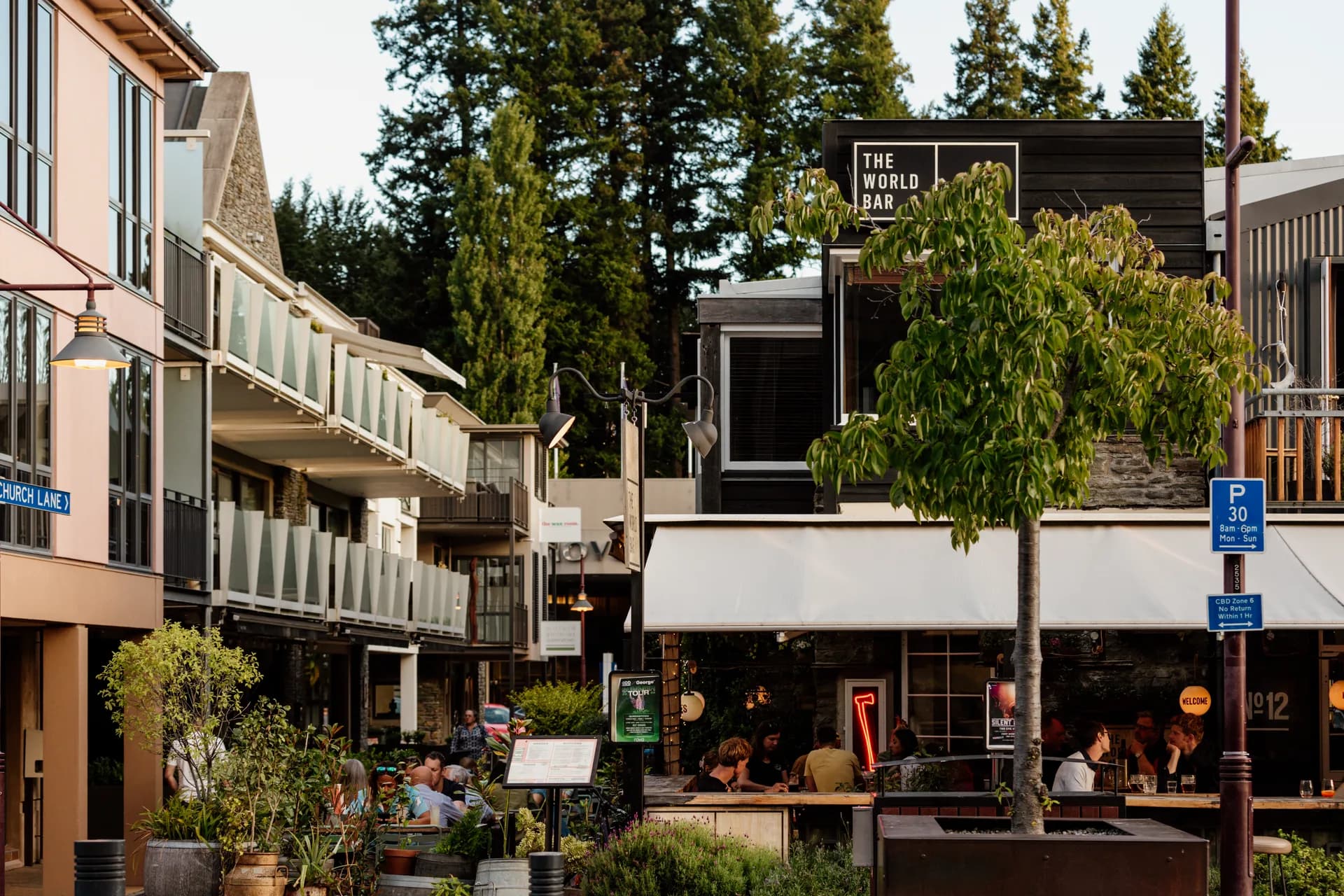
- Arrowtown's main street and the Queenstown waterfront: where the woolshed became a hotel and never stopped being one.
Start with things to do if you want to book any of it, or the walks if you would rather find the history on foot, several of the tracks around town follow water races and pack trails cut by miners.